Cloud Cost Optimization: Smart Strategies to Reduce Cloud Expenses
Cloud computing has transformed how businesses build and scale applications. However, many organizations quickly discover that cloud bills can grow faster than expected. Without proper planning, companies waste thousands of dollars every month on unused resources.
This is where cloud cost optimization becomes critical.
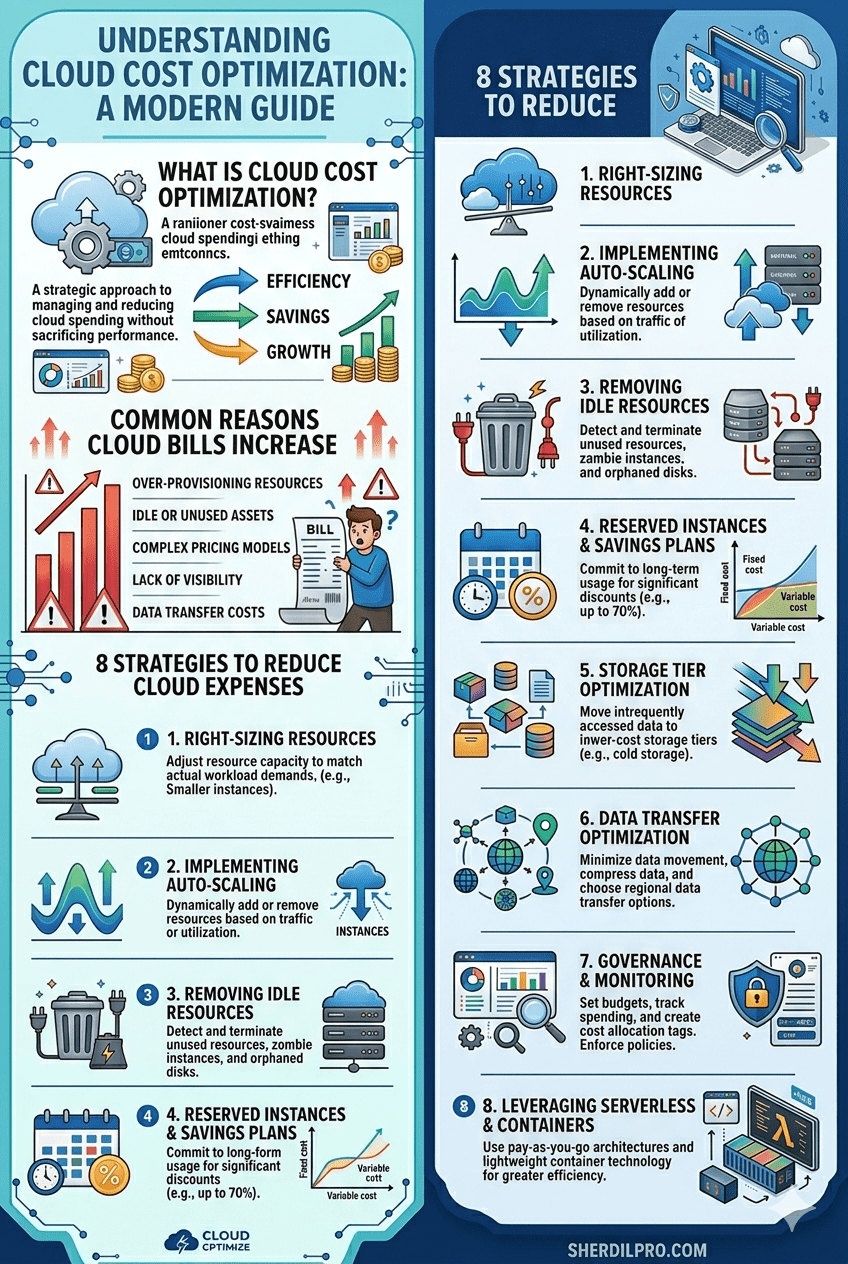
Cloud cost optimization is the process of managing, reducing, and controlling cloud spending while maintaining performance and reliability. When done correctly, businesses can significantly reduce cloud expenses, improve operational efficiency, and maximize return on investment.
In this guide, we will explore practical strategies, real examples, and expert cloud efficiency tips to help businesses control their cloud infrastructure costs.
Table of Contents
Why Cloud Cost Optimization Matters
Many organizations assume the cloud automatically saves money. In reality, cloud platforms follow a pay-as-you-go model, which means poor management leads to unnecessary spending.
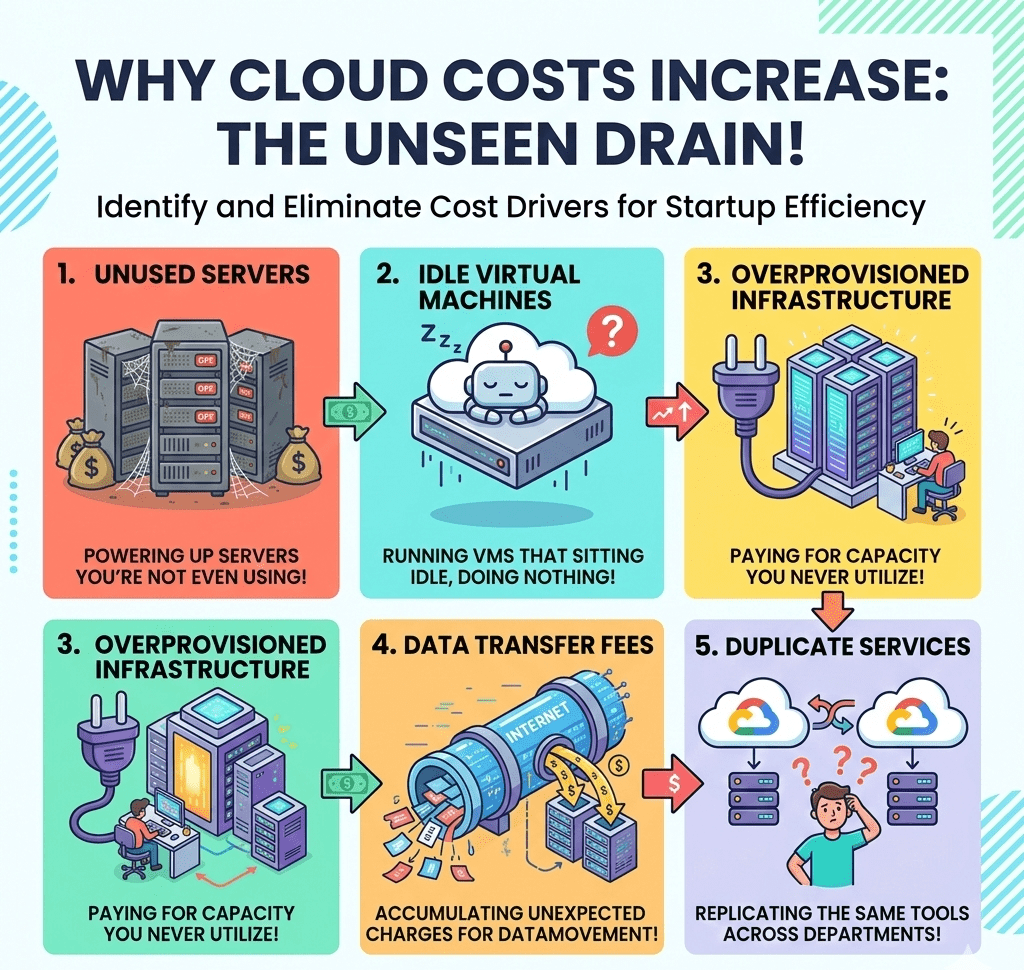
Common reasons companies overspend include:
- Idle virtual machines
- Over-provisioned storage
- Unused IP addresses
- Poor scaling policies
- Lack of monitoring
- Duplicate services across teams
A structured cloud cost optimization strategy helps companies:
- Reduce waste
- Improve infrastructure efficiency
- Forecast cloud spending
- Scale sustainably
- Maintain performance
Companies that actively manage cloud costs can often reduce their cloud bill by 20–40%.
Understand Your Cloud Spending First
Before applying optimization strategies, you need visibility.
Start by analyzing:
- Which services cost the most
- Which workloads run continuously
- Which resources remain unused
- Peak usage hours
- Data transfer costs
Most providers offer built-in tools:
- AWS Cost Explorer
- Azure Cost Management
- Google Cloud Billing Reports
If you are still choosing a provider, read our detailed comparison:
Azure vs AWS vs Google Cloud: Which is Best for Your Project?
Understanding your spending patterns is the first step toward effective cloud cost optimization.
Right-Size Your Cloud Resources
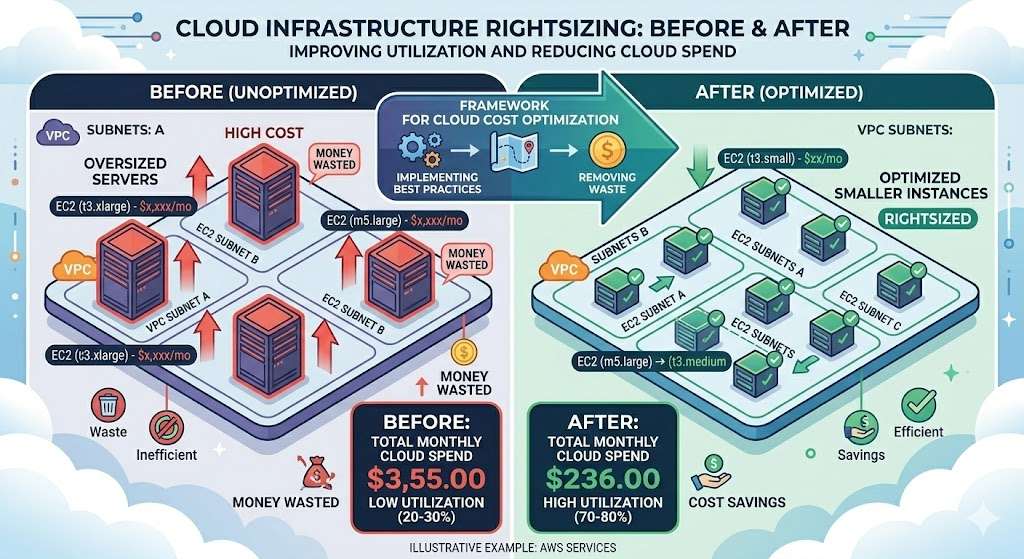
One of the biggest ways to reduce cloud expenses is right-sizing.
Many companies deploy larger servers than necessary. Over time, these resources remain underutilized but continue generating costs.
Right-sizing involves:
- Downgrading oversized instances
- Adjusting CPU and memory usage
- Optimizing databases
- Using smaller container workloads
Example:
A company running a large instance with only 20% CPU usage can switch to a smaller instance and reduce costs by up to 50%.
Regular audits are one of the most effective cloud efficiency tips organizations can adopt.
Use Auto-Scaling to Match Demand
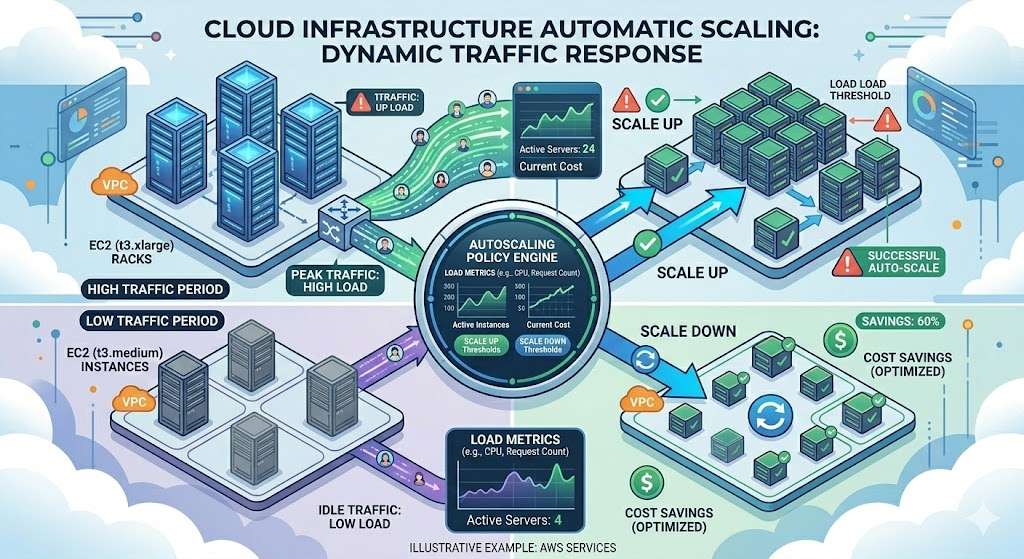
Auto-scaling ensures resources increase during high traffic and decrease during low usage.
Without scaling, companies pay for maximum capacity even when it is not needed.
Benefits include:
- Lower operational costs
- Improved performance
- Better resource utilization
For example:
An e-commerce website may experience traffic spikes during sales events but very low usage at night.
Auto-scaling ensures the infrastructure grows and shrinks automatically, improving cloud cost optimization.
Shut Down Idle Resources
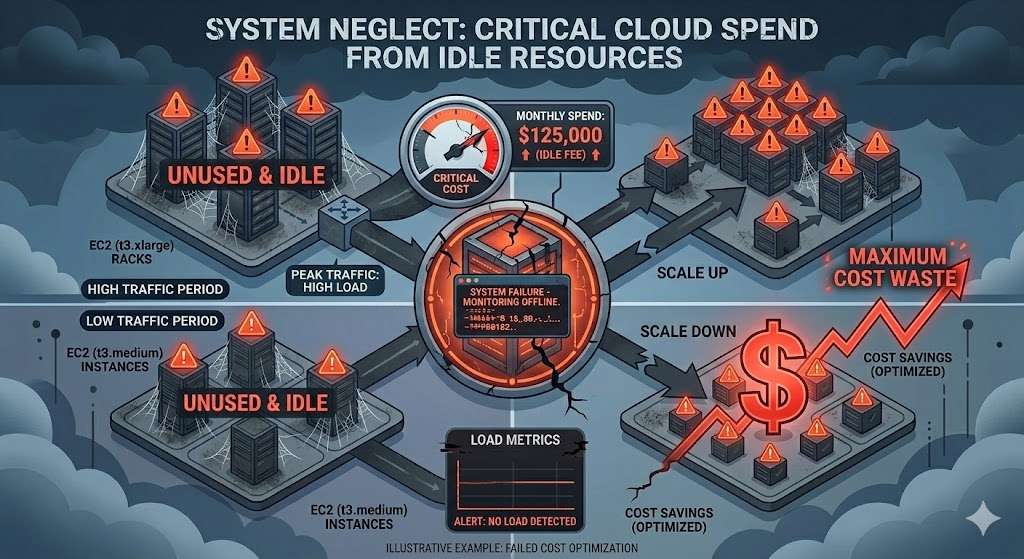
Many companies unknowingly run unused services for months.
Common idle resources include:
- Test environments
- Old virtual machines
- Unused storage volumes
- Development databases
- Load balancers
Automating shutdown schedules can significantly reduce cloud expenses.
Example schedule:
Development servers:
Stop at 8 PM → Restart at 8 AM
This simple step alone can reduce costs by 30–60% for non-production workloads.
Choose Reserved or Savings Plans
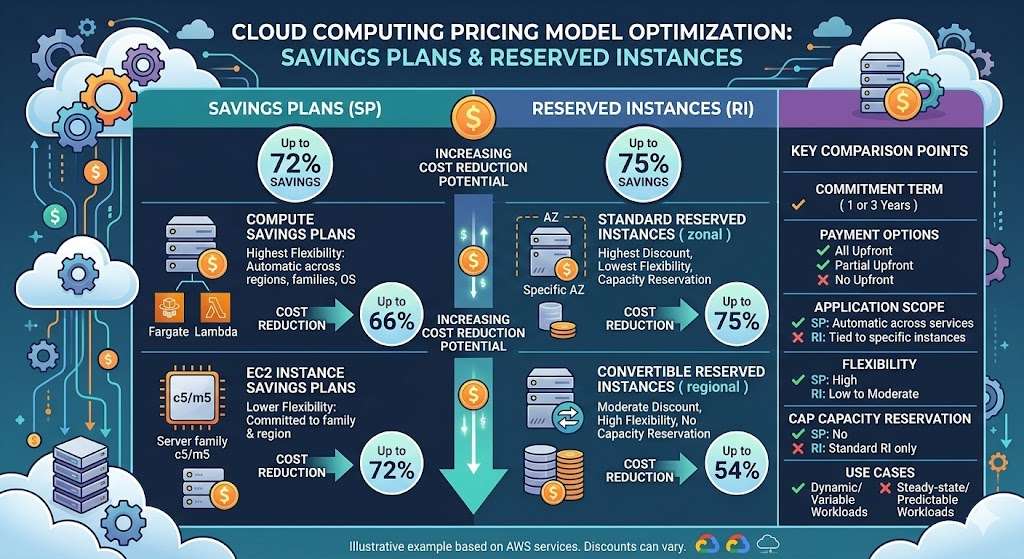
Cloud providers offer discounts for long-term commitments.
Instead of paying hourly on demand, companies can purchase:
- Reserved instances
- Savings plans
- Committed use contracts
Savings can reach 70% compared to on-demand pricing.
This strategy works best for:
- Databases
- Production workloads
- Long-running services
It is one of the most overlooked cloud efficiency tips.
Optimize Cloud Storage Costs
Storage costs silently grow over time.
To optimize storage:
Delete unnecessary data
Compress large files
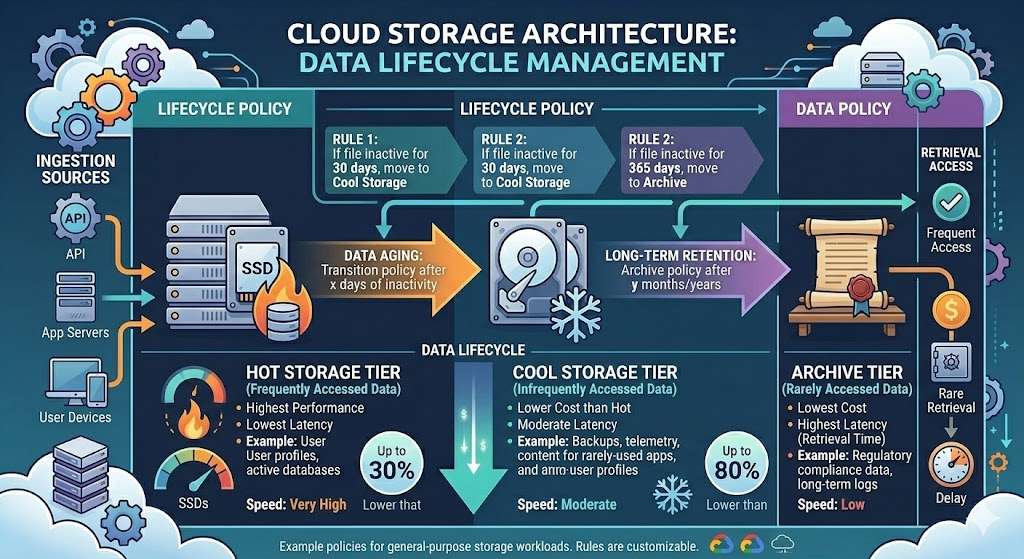
Move cold data to cheaper storage tiers
Use lifecycle policies
Archive backups
Example storage tiers:
Hot storage – frequent access
Cool storage – occasional access
Archive storage – rarely accessed
Using lifecycle policies ensures older files automatically move to cheaper storage options, improving cloud cost optimization.
Monitor Data Transfer Costs
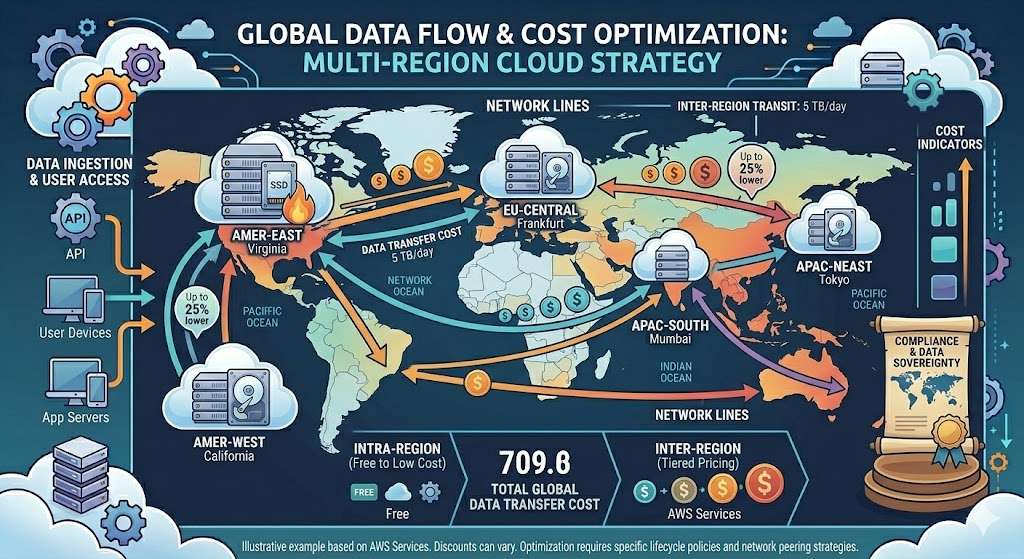
Many organizations ignore bandwidth charges until they become significant.
Data transfer costs increase due to:
- Cross-region communication
- Multi-cloud architecture
- External API traffic
- CDN misconfiguration
To reduce cloud expenses, businesses should:
- Keep workloads in the same region
- Use CDNs efficiently
- Compress outgoing data
- Cache frequent requests
Monitoring bandwidth usage is a vital part of cloud financial management.
Implement Cloud Cost Governance
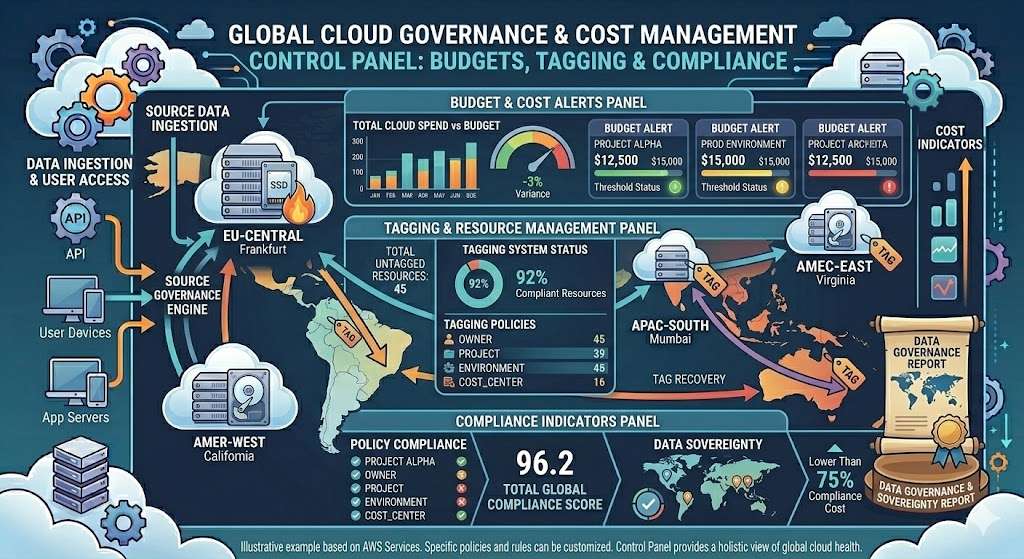
Without policies, cloud environments become chaotic.
Cloud governance includes:
- Budget alerts
- Resource tagging
- Spending limits
- Department usage tracking
- Automated compliance checks
Tagging resources helps identify:
Project owner
Department
Environment (Dev / Test / Production)
This visibility makes cloud cost optimization far easier.
Use Containers and Serverless Architectures
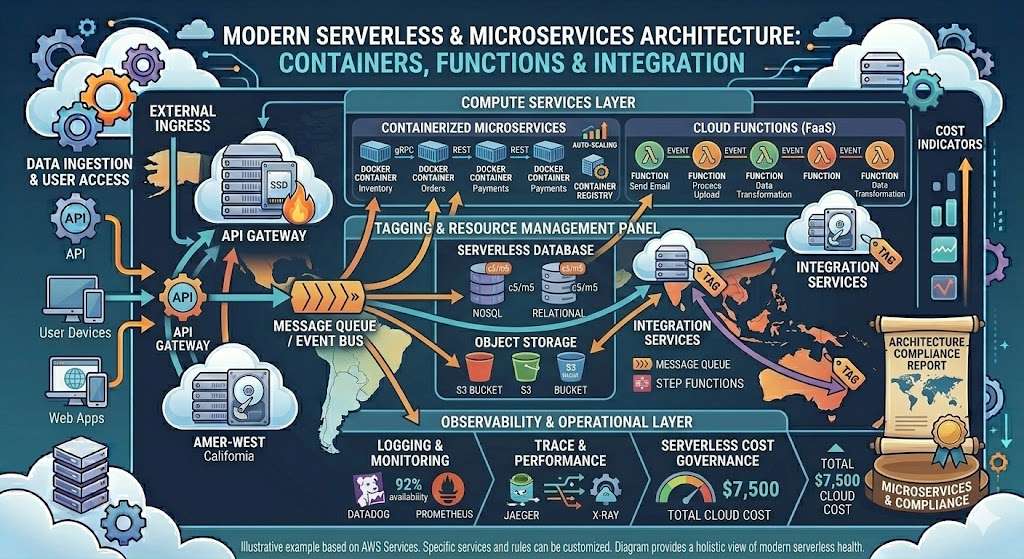
Modern cloud architectures can significantly lower infrastructure costs.
Serverless computing allows businesses to pay only for actual execution time.
Benefits include:
- No idle servers
- Automatic scaling
- Reduced operational management
- Lower infrastructure cost
Containers also help improve utilization by running multiple applications on the same resources.
These are advanced cloud efficiency tips used by high-growth tech companies.
Continuously Audit Your Cloud Infrastructure
Cloud optimization is not a one-time activity.
Best practice is to review costs:
- Weekly
- Monthly
- After deployments
- After scaling changes
Regular audits identify:
Unused resources
Inefficient architectures
Security risks
Overspending departments
Companies that continuously review usage maintain long-term cloud cost optimization.
Common Cloud Cost Optimization Mistakes
Many organizations struggle because they:
Ignore monitoring tools
Forget unused resources
Overestimate infrastructure needs
Avoid automation
Lack internal cloud expertise
Avoiding these mistakes can significantly reduce cloud expenses.
When to Work with Cloud Experts
Managing complex cloud infrastructure requires expertise.
A professional cloud team can help you:
- Design cost-efficient architecture
- Implement automation
- Improve security
- Reduce infrastructure waste
- Scale applications efficiently
If your cloud bill keeps increasing, expert support may be the best investment.
Cloud Solutions
Optimize Your Cloud Infrastructure Today
Our cloud specialists help businesses implement advanced cloud cost optimization strategies that reduce waste and improve performance.
Our services include:
- Cloud architecture design
- Cost optimization audits
- AWS, Azure, and Google Cloud consulting
- Infrastructure automation
- Performance optimization

Contact Us
Need help managing your cloud infrastructure?
Our experts can analyze your current setup and provide practical solutions to reduce cloud expenses and improve performance.
Contact us today to schedule a free consultation.
FAQs: Cloud Cost Optimization
What is cloud cost optimization?
Cloud cost optimization is the process of managing and reducing cloud infrastructure expenses while maintaining performance, security, and scalability. It involves strategies such as right-sizing resources, using auto-scaling, removing unused services, and selecting cost-effective pricing models. Effective cloud cost optimization helps businesses control spending and maximize the value of their cloud investments.
Why do cloud costs increase unexpectedly?
Cloud costs often rise because of unused resources, over-provisioned servers, inefficient storage usage, and data transfer fees. Many organizations also forget to shut down development environments or fail to monitor usage regularly. Implementing proper monitoring and automation can significantly reduce cloud expenses.
What are the best ways to reduce cloud expenses?
Some of the most effective ways to reduce cloud expenses include:
- Right-sizing virtual machines and databases
- Enabling auto-scaling to match traffic demand
- Removing idle resources and unused storage
- Using reserved instances or savings plans
- Optimizing storage tiers for infrequently accessed data
- Monitoring cloud usage regularly
These strategies improve efficiency while lowering operational costs.
How does auto-scaling help in cloud cost optimization?
Auto-scaling automatically increases or decreases computing resources based on real-time demand. During high traffic, additional servers are added, and during low traffic, unnecessary resources are removed. This ensures businesses only pay for what they use, which is a key principle of cloud cost optimization.
Which cloud provider offers the best cost optimization tools?
Major cloud platforms such as Amazon Web Services, Microsoft Azure, and Google Cloud provide built-in tools for managing cloud costs. These tools help monitor usage, set budgets, track spending, and recommend optimization opportunities. The best choice depends on your project requirements, scalability needs, and existing infrastructure.
How often should cloud infrastructure be optimized?
Cloud infrastructure should be reviewed regularly, ideally every month or after major deployments. Continuous monitoring allows teams to identify waste, adjust resources, and implement new optimization strategies to maintain cost efficiency.
What are some cloud efficiency tips for businesses?
Businesses can improve cloud efficiency by:
- Using serverless architecture for unpredictable workloads
- Implementing resource tagging and governance policies
- Monitoring cloud usage through analytics dashboards
- Automating infrastructure management
- Consolidating duplicate services
These cloud efficiency tips help organizations scale operations while keeping costs under control.
Can small businesses benefit from cloud cost optimization?
Yes. Small businesses often operate with limited budgets, so optimizing cloud infrastructure can significantly reduce operational expenses. By using the right pricing models, automation, and monitoring tools, small companies can scale efficiently without overspending.
How do I choose between AWS, Azure, and Google Cloud?
Choosing the right cloud provider depends on factors such as pricing models, available services, scalability, and integration with existing tools. Businesses should compare features, performance, and long-term costs before selecting a platform. For a detailed comparison, read our guide on Azure vs AWS vs Google Cloud: Which is Best for Your Project?