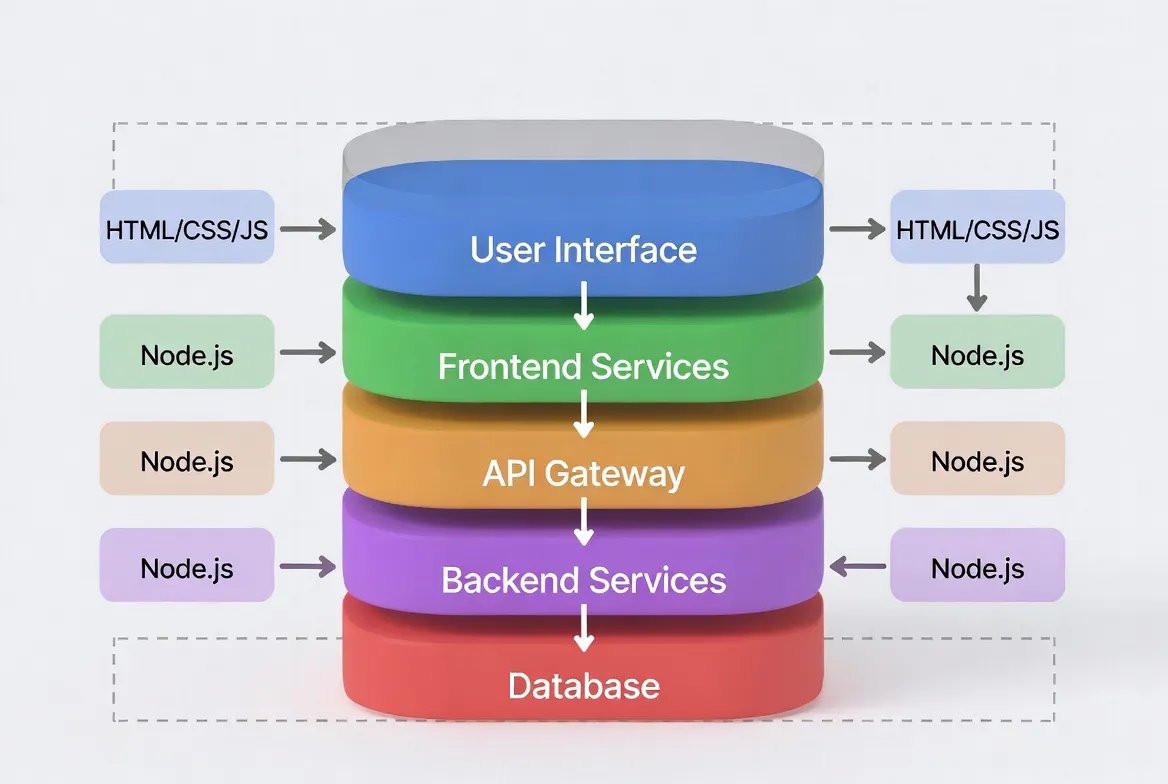
How to Choose the Right Tech Stack for Your Startup
Introduction
Building a startup product requires many important decisions. One of the biggest decisions is choosing the right technology stack. The technologies you select will influence development speed, product quality, scalability, security, and long-term costs.
Many startups fail not because their idea is bad, but because their technology foundation cannot support growth. Choosing the right stack helps teams build faster, launch earlier, and scale without major problems.
In this guide, you will learn what a technology stack is, which stacks startups use, and how to choose the best one for your product.
What is the best tech stack for a startup?
The best tech stack for a startup depends on the product, scalability needs, and development team skills. Popular startup stacks include the MERN stack, Django with React, and cloud-based serverless architectures because they allow fast development and easy scaling.
What Is a Technology Stack?
A technology stack is a combination of programming languages, frameworks, databases, and tools used to build and run an application.
Every digital product is built using multiple layers of technology working together.
Typical layers include:
Frontend
Backend
Database
Infrastructure
DevOps tools
Frontend Technologies
Frontend development focuses on everything users see in the browser.
This includes:
Layout
Navigation
Buttons
Forms
Animations
Dashboards
Popular frontend technologies include:
React
Angular
Vue
React is widely used by startups because it allows developers to build fast and reusable components.
Angular is more structured and commonly used in large applications.
Vue is lightweight and easy to learn.
Backend Technologies
The backend is responsible for application logic and data processing.
It manages:
Authentication
APIs
Business logic
Security
Data storage
Popular backend frameworks include:
Node.js
Django
Ruby on Rails
ASP.NET Core
Node.js allows developers to use JavaScript across the entire application, which speeds up development.
Django is known for security and reliability.
Databases
Databases store the data your application needs to function.
Two main types exist.
SQL databases:
PostgreSQL
MySQL
NoSQL databases:
MongoDB
Firebase
SQL databases are ideal for structured data.
NoSQL databases offer flexibility and scalability.
| Layer | Best Technologies |
|---|---|
| Frontend | React, Angular, Vue |
| Backend | Node.js, Django, .NET |
| Database | PostgreSQL, MongoDB |
| Cloud | AWS, Azure, Google Cloud |
Why Choosing the Right Tech Stack Matters
Selecting the wrong technologies can slow development and increase costs.
Faster Development
Modern frameworks provide tools that speed up development.
Startups must launch quickly to test their ideas in the market.
Scalability
Your application should support growth.
A good tech stack can handle thousands or millions of users.
Security
Security protects user data and business reputation.
Frameworks with strong security features reduce risk.
Cost Efficiency
Startups often choose open-source technologies to reduce expenses.
Cloud infrastructure also allows pay-as-you-go pricing.
Popular Tech Stacks for Startups
Several technology stacks are widely used by successful startups.
MERN Stack
MongoDB
Express
React
Node.js
Advantages:
Full JavaScript development
Fast MVP building
Large community
High scalability
MEAN Stack
MongoDB
Express
Angular
Node.js
Often used for enterprise applications.
LAMP Stack
Linux
Apache
MySQL
PHP
Advantages:
Stable
Cost-effective
Reliable
JAMstack
JavaScript
APIs
Markup
Benefits:
Faster performance
Improved security
Lower server costs
Microsoft Stack
.NET
Azure
SQL Server
Often used in enterprise and fintech startups.
How to Choose the Right Tech Stack
Choosing technology requires balancing several factors.
Define Your Product
Understand what you are building.
Examples:
SaaS platform
Marketplace
AI tool
Mobile app
Different products require different architectures.
Build an MVP First
Startups should focus on launching quickly.
An MVP validates your idea before investing heavily.
Evaluate Developer Skills
Use technologies your team already understands.
This reduces development time and risk.
Consider Scalability
Even early products should be able to grow without major rewrites.
Calculate Long-Term Costs
Consider:
hosting
maintenance
developer hiring
infrastructure
Common Mistakes Startups Make
Overengineering
Some startups build complex systems too early.
This wastes time and resources.
Following Trends
Choosing technology because it is popular can be risky.
The best stack depends on your product.
Ignoring Hiring Challenges
Rare technologies make hiring developers difficult.
Choose widely supported tools.
Tech Stacks Used by Successful Startups
Examples of real companies:
| Company | Technology |
| Netflix | Node.js |
| Uber | Node.js + Python |
| Python + Django | |
| Airbnb | React + Ruby on Rails |
These companies evolved their stacks as they grew.
Future Trends in Startup Technology
Serverless Computing
Serverless platforms allow developers to run applications without managing servers.
Benefits:
Lower infrastructure management
Automatic scaling
Faster deployment
AI-Powered Applications
Artificial intelligence is becoming part of many modern products.
Examples include recommendation engines, automation tools, and smart assistants.
Edge Computing
Edge computing improves speed by processing data closer to users.
This reduces latency and improves user experience.
Frequently Asked Questions
What is the best tech stack for startups?
The best stack depends on the product type, scalability needs, and team expertise. Popular stacks include MERN, Django with React, and serverless architectures.
How do startups choose technology stacks?
Startups evaluate product requirements, development speed, scalability, cost, and developer availability.
Which backend technology is best for startups?
Node.js, Django, and ASP.NET Core are commonly used because they are scalable and well supported.
Should startups use microservices?
Early-stage startups usually begin with a monolithic architecture and move to microservices as they grow.
Feel Free to Contact and get Free Consultation from Sherdilpro.com tech team.